Navigating Linguistic and Cultural Support Gaps: The Modern Imperative for Scalable Solutions
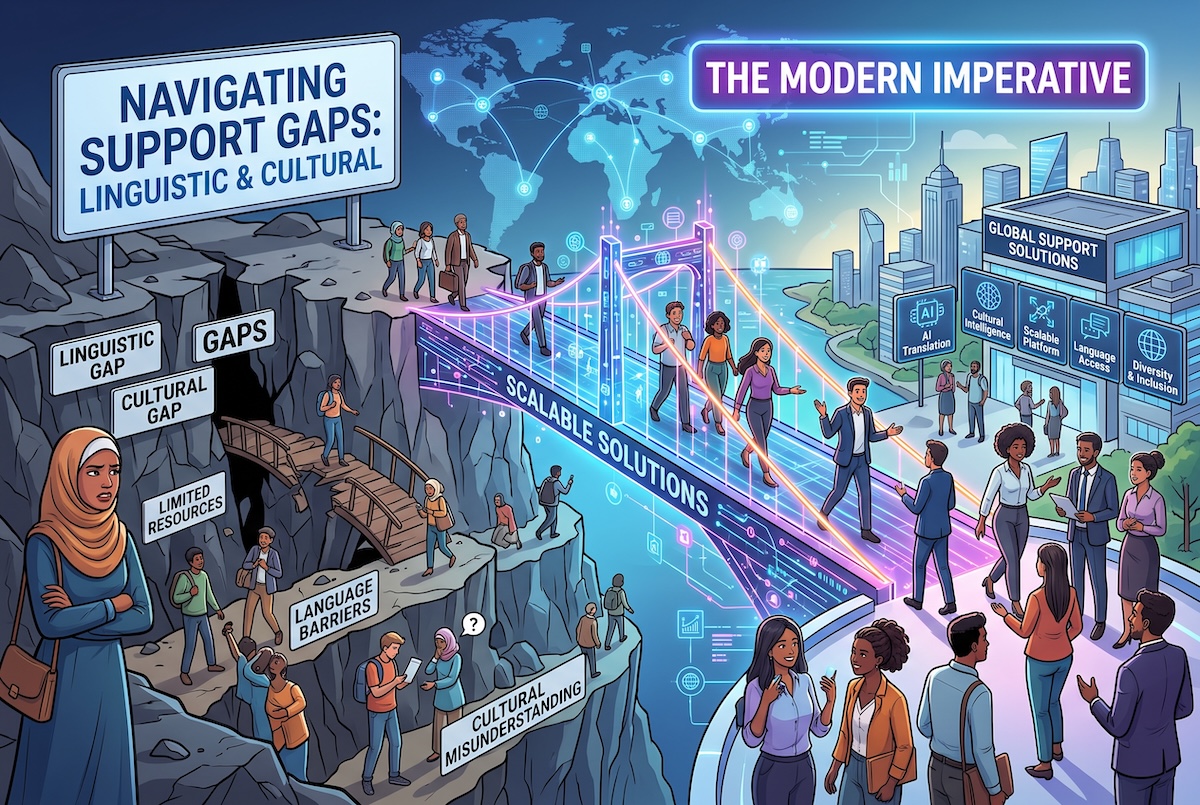
The recent restructuring and budget adjustments within large public service organizations—particularly those affecting specialized bilingual and cross-cultural support roles—have ignited intense discussions among community members, service providers, and advocacy groups. When institutions face difficult fiscal realities and choose to transition specialized, multi-site support roles into localized, facility-specific assignments, a dangerous service gap often emerges. This operational shift leaves many individuals who rely on targeted emotional, linguistic, and cultural interventions without the vital resources they depend on.
In this climate of uncertainty, the call for scalable, professional, and culturally competent solutions has never been more urgent. While organizations struggle to balance financial constraints with their core mission toward vulnerable populations, industry leaders like Global Arena offer a roadmap for how modern institutions can bridge critical communication and support gaps through expert, technology-integrated linguistic and cultural solutions.
The Crisis: When Administrative Logic Undermines Human Support
The core of the issue in many institutional restructurings lies in the trade-off between administrative efficiency and human-centric service. By assigning bilingual specialists to single, fixed locations, organizations often aim to ensure a baseline level of physical presence across various sites. However, this generalized approach frequently neglects the demographic realities of the populations they serve, which are often clustered in specific neighborhoods or facilities.
When a specialist who previously served multiple sites is suddenly restricted to one location, the individuals in the facilities they left behind—and those requiring specialized linguistic crisis intervention—are effectively orphaned from that support. For an individual dealing with complex, intersectional crises, a facility-specific worker who lacks the specific linguistic or cultural context may struggle to provide the same level of care as a specialist trained in these nuanced environments.
From a Language School to a Full-Service Language Partner
Global Arena’s roots trace back to 1989, with the founding of the Philadelphia Inlingua franchise — at the time, a language school focused solely on instruction. As clients increasingly asked for language support beyond training — interpretation, translation, and broader access solutions — the need for a dedicated full-service provider became clear. Global Arena was founded in 2003 to meet that need, and has spent over two decades building the infrastructure, interpreter networks, and technology partnerships to serve institutions navigating exactly this kind of linguistic-access gap.
1. Beyond Basic Translation: the need for Intercultural Training
Global Arena’s expertise extends far beyond simple document translation. For any institution, their Intercultural Training programs can be transformative. If an organization cannot afford a bilingual specialist in every single facility, they must ensure that every staff member—from front desk personnel to senior leadership—has the skills to engage effectively with non-English speaking clients and community members.
2. Scalable Support: OPI and Video Remote Interpreting (VRI)
When a crisis occurs, time is of the essence. A specialist cannot be in ten places at once, but with Global Arena’s Over-the-Phone Interpreting (OPI) and Video Remote Interpreting (VRI) services, an organization can have a qualified interpreter present within seconds, across over 140 languages in a truly On-Demand fashion. This allows on-site personnel to bridge the gap between their own expertise and the specific linguistic needs of the individual, ensuring that no person is left without a “voice” during a crisis.
3. Building In-House Capacity: Language Training for Institutional Staff
Beyond On-Demand interpretation, some institutions need a longer-term fix: staff who can communicate directly, without waiting for a third party. Global Arena’s Language Training programs — rooted in the company’s original Inlingua instructional model — equip case workers, front-line staff, and administrators with functional language skills for the populations they serve most often. This doesn’t replace professional interpretation for legal or clinical precision, but it reduces daily reliance on it for routine interactions, freeing OPI and VRI capacity for the higher-stakes cases where a certified interpreter is essential.
A New Vision: The Hybrid Support Model
If institutions and corporations are committed to keeping their current localized staffing models due to financial constraints, the next step must be to build a support layer that compensates for the loss of itinerant staff:
- Facility-Based Foundation: Keep localized personnel, but provide them with ongoing intercultural training to ensure they are equipped to handle the diversity of their specific facility populations.
- Virtual “Surge” Capacity: When a facility experiences a specific influx of non-English speakers or a localized crisis, utilize On-Demand OPI and VRI, across 140+ languages, to bring in external experts instantly — as a complement to, not a substitute for, in-person support.
- Internal Capacity Building: Invest in language training for staff who regularly handle routine, repeat-population interactions, reducing dependency on third-party interpretation for the majority of day-to-day exchanges.
- Professionalized Communication: Use professional linguistic services for all public outreach, moving away from ad-hoc or machine-generated translations that often lead to critical misunderstandings.
The Moral Imperative of Communication
The fears raised by community members and frontline workers regarding restructuring are entirely valid. When an individual experiences trauma or hardship, the inability to express that experience in their native language represents a fundamental system failure.
The solution is not a return to an underfunded, reactive status quo — it’s a model where expertise is accessible, scalable, and technology-enabled. Global Arena has spent over two decades building toward exactly that.